NASA Artemis changes force Orion spacecraft to fly in a new and unfamiliar posture
Updated lunar landing plans require the Orion capsule to travel backward to the Moon, prompting necessary modifications to its European-built service module.
By Harper Foster ·
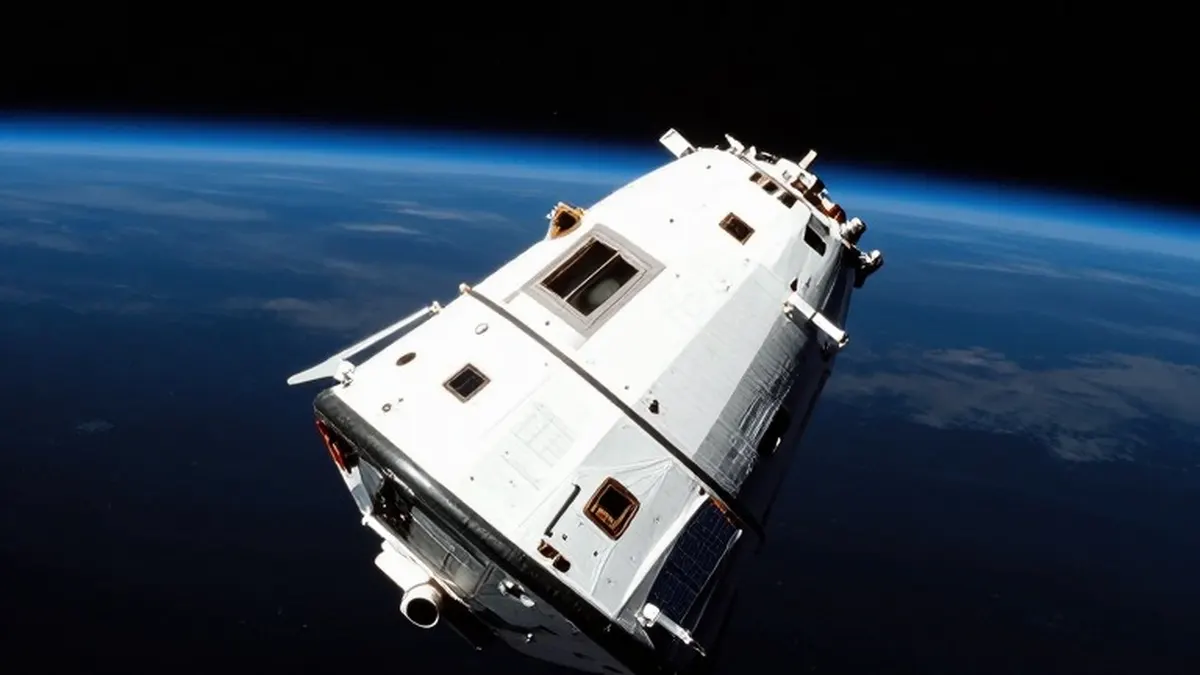
NASA has announced a significant restructuring of the Artemis program, the agency's primary initiative to return humans to the lunar surface. The newly proposed adjustments are intended to provide greater operational flexibility to the private companies contracted to build the lunar landers. SpaceX, which is developing the Starship vehicle, and Blue Origin, which is working on the Blue Moon lander, will both see changes in how their craft interact with the crewed Orion spacecraft.
For SpaceX, the revised plan involves a distinct orbital sequence. A Starship lunar lander will be fueled in low-Earth orbit before docking with the Orion capsule in high-Earth orbit. The four-person crew will initially travel toward the Moon aboard Orion. Once in position, two of the astronauts will transfer into the Starship vehicle to execute the landing on the lunar surface, while the other two remain in Orion.
In the case of Blue Origin, the operational shift involves moving the rendezvous point with Orion to low-lunar orbit. This change places a heavier logistical and technical burden on the Orion spacecraft, which is built by Lockheed Martin for NASA. To understand the specific implications of these new flight profiles for the spacecraft, industry media spoke with Kirk Shireman, who serves as the Human Spaceflight Exploration and Orion program manager at Lockheed.
Shireman explained that the new docking configuration with Starship requires Orion to travel to the Moon in a backward orientation. In this setup, the Service Module is positioned at the top of the vehicle stack. This represents a fundamentally different flying posture than what Orion was originally designed to handle, creating specific challenges for the spacecraft's propulsion systems.
The Service Module, which is provided by the European Space Agency, will require modifications to its propellant tanks to accommodate this inverted flight profile. Under normal operating conditions, liquid propellant settles in a specific direction. However, when the spacecraft is pushed in the opposite direction, the liquid shifts toward the gas inlet side of the tanks.
Shireman noted that having liquid in the gas section of the tank is undesirable and can lead to technical issues. He stated, “When you push it the other way, the liquid goes to the gas end of the tank, and you don’t want the liquid in the gas part. Bad things can happen to you.” To mitigate these risks, the European Space Agency and its main contractor, Airbus, are currently working on modifying the vehicle’s tanks specifically for Starship lunar missions.
The changes reflect a broader trend in NASA's approach to lunar exploration, shifting more of the complexity and adaptation requirements onto the crewed spacecraft rather than the landers. This strategy aims to streamline the development timeline for the landers, which have faced their own set of challenges in recent years.
Lockheed Martin and the European Space Agency will need to ensure that these tank modifications are completed in time for the upcoming missions. The ability to reliably manage propellant flow in this new orientation is critical for the safety of the crew and the success of the lunar landing operations.
The announcement marks a pivotal moment for the Artemis program, as it solidifies the operational roles of the various hardware components. By adjusting the flight profile of Orion, NASA is attempting to create a more robust and adaptable system for future lunar missions.
Stakeholders in the space industry are now closely monitoring the progress of these modifications. The success of the new configuration will depend on how well the hardware performs in the altered environment of high-Earth and lunar orbits.
More News · National news · Report a business · Got a Story?