State Comptroller Report Reveals Significant Delays and Oversight Gaps in Tourism Projects
A State Comptroller report reveals widespread delays, budgeting errors, and governance failures in state-owned tourism infrastructure projects.
By Harper Foster ·
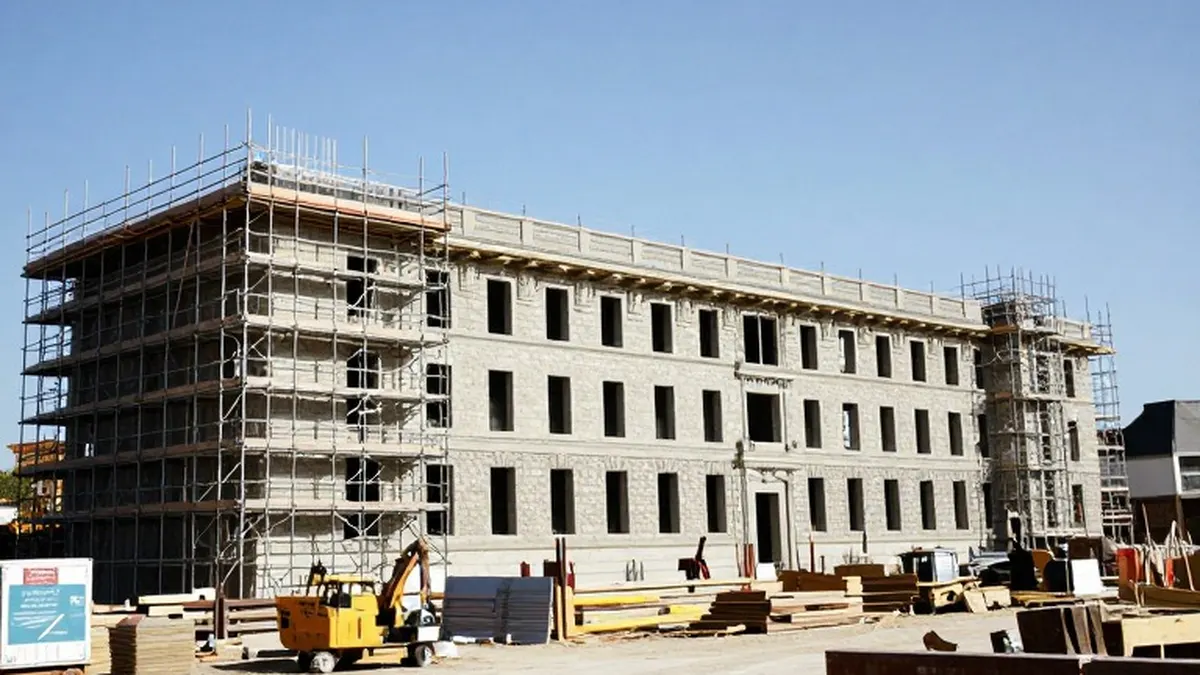
A report released on Monday by the State Comptroller’s Office highlights severe delays and management failures in government tourism projects. The audit indicates that the Tourism Ministry, the Government Companies Authority, and three state-owned entities lacked a comprehensive understanding of project performance. Consequently, officials were unable to effectively assess whether infrastructure initiatives met their deadlines, stayed within budget, or maintained adequate quality standards.
The investigation focused on the Israel Government Tourist Corporation, the Dead Sea Preservation Government Company, and the Old Akko and Nazareth Development Company. These entities are responsible for managing public tourism infrastructure, such as promenades, parks, historic sites, and urban routes. While they handle planning, contractor hiring, and construction supervision, they do not perform the physical building work themselves. The audit covered 68 projects executed between 2010 and 2025, with total expenditures reaching approximately NIS 377 million.
Project timelines were frequently missed across the board. At the Government Tourism Company, contractors required at least twice the allotted time for 22 of the 30 examined projects that had set deadlines. In three specific cases, the duration of work was at least nine times longer than originally planned. Delays also occurred prior to the start of construction. For 12 of the 46 projects reviewed, a gap of at least five years existed between receiving a work order and signing an agreement with the local authority. In two instances, this pre-construction phase took a decade or more.
Similar patterns of delay were observed in the other state-owned companies. All nine projects examined at the Old Akko and Nazareth Development Company exceeded their allotted construction periods. Likewise, all six projects reviewed at the Dead Sea company that had specific deadlines also surpassed their planned timelines. The lack of a consolidated record forced the comptroller’s office to construct its own database to analyze these project metrics.
Budget monitoring was identified as a significant area of deficiency. The Government Tourism Company failed to analyze spending against original budgets and did not classify supplementary funding for unforeseen events as budget overruns. The Dead Sea company exhibited similar issues, with its information systems failing to distinguish between initial allocations and later financial additions. Furthermore, administrative costs were substantially higher than those at comparable government entities. In 2025, management and general expenses represented 10.5% of total expenditure at the Akko and Nazareth company, 11.1% at the Government Tourism Company, and 12.8% at the Dead Sea company. This contrasts sharply with the average of 4.8% found in other government project-management companies.
Basic corporate governance failures were also evident. As of September 2025, both the Dead Sea and Akko and Nazareth companies had operated with only one board director for approximately four years. This left them without the quorum necessary to hold valid board meetings. Additionally, these entities lacked audit committees for periods of approximately five and six years, respectively. The report cited the failure of ministers to appoint directors as a primary cause of these governance gaps.
In January 2026, the government approved a merger of the Akko and Nazareth company into the Government Tourism Company, along with the transfer of the Dead Sea company’s tourism-development activities. However, the audit found that the preparatory work for this consolidation was based on incomplete analysis. Officials focused on potential savings from salaries and services but did not evaluate project delivery quality or consider alternatives, such as contracting directly with private project managers. This oversight was notable given that the Government Tourism Company had already outsourced the management of roughly 42% of its projects between 2022 and 2025.
Despite the criticisms, some steps toward improved oversight were noted. The Government Companies Authority set efficiency targets for the Dead Sea company in 2025 and for the Government Tourism Company in 2026. The Tourism Ministry also introduced measures to track completed projects during the audit period, though it did not establish numerical targets to judge success. The comptroller’s office recommended better information systems, stronger oversight mechanisms, and the completion of board appointments. It also highlighted that an earlier recommendation regarding enforcement measures for municipalities maintaining completed sites remained unfulfilled.
The main audit period ran from November 2024 to September 2025, with supplementary checks continuing through June 2026. The report was completed and submitted in early July, before Matanyahu Englman ended his term as state comptroller. Its release was delayed by the dissolution of the previous Knesset, which prevented it from being tabled after the statutory 10-week interval. The swearing-in of the new Knesset has now allowed for its publication.
Israel has been without a state comptroller since July, following the High Court’s invalidation of attorney Michael Rabello’s election due to a ballot secrecy violation. The court recently ruled that Knesset Speaker Amir Ohana breached its order by failing to arrange a repeat vote, leaving the appointment to the incoming Knesset. Rabello subsequently withdrew his candidacy. While comptroller’s office staff can continue existing audits and investigate complaints, they cannot finalize new reports or issue protection orders until a new comptroller is appointed.