India Approves $22 Billion Defense Modernization Plan as China Border Tensions Persist
New Delhi cleared 2.12 trillion rupees in military purchases this week, aiming to narrow the technology gap with China after an official confirmed ongoing confrontations along the border.
By Lorenzo Marshall ·
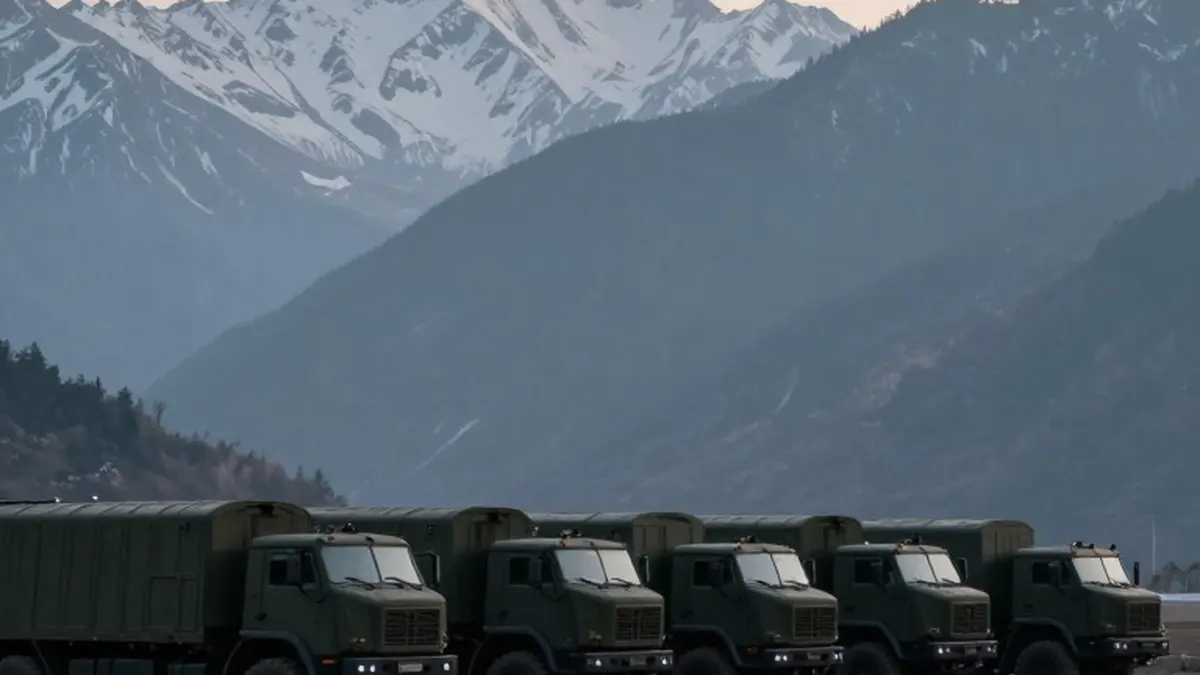
India has approved 2.12 trillion rupees ($22 billion) in spending to modernize its military equipment, a decision announced on Monday as friction with China along their shared border continues. The country is the world's second-largest arms importer and is investing heavily to keep pace with the technological progress of its neighbor, with which it maintains an uneasy peace.
The approval followed remarks last week by Shatrujeet Singh Kapoor, a director general of a division of the Indo-Tibetan Border Police, who said confrontations with Chinese soldiers were under way at several locations along India's north-eastern border. He called China the "biggest adversary" and said modernization was needed. "It will be difficult to compete with China using traditional methods," Kapoor said.
The spending plan covers long-range kamikaze drones, surveillance and strike systems, counter-drone technologies, short-range air defense, artillery, helicopters and naval platforms. Experts told CNBC that New Delhi increasingly regards Beijing as a threat, particularly because of military ties between China and Pakistan, and that the purchases are meant to close the technological gap.
On Friday, a spokesperson for India's foreign ministry said the situation in the border areas "gets disturbed from time to time when Chinese forces diverge from established patrolling patterns." Beijing replied that it "strictly abides by the relevant agreements and common understandings reached between the two countries."
Pieter Wezeman, a senior researcher at the Stockholm International Peace Research Institute (SIPRI), said India's military policy is largely shaped by its long-running conflict with Pakistan and a growing perception of China as a danger. A SIPRI report earlier this year found that 61% of Chinese arms exports between 2021 and 2025 went to Pakistan. Last year, India carried out strikes against alleged terrorist infrastructure in Pakistan.
According to Wezeman, the new purchases will bring in South Korean components and technology for artillery, French engines and avionics for helicopters, and drones from the United States and Israel. Cooperation with Russia and Japan could also be possible given India's need for a technological upgrade.
Citi said in a report on Tuesday that India has cleared 3.7 trillion rupees in military spending since April. That is more than half of the 6.73 trillion rupees approved in the financial year that ended in March 2026, which was a 10-year high. Although New Delhi plans to buy 82% of its defense equipment from domestic industry, foreign firms are expected to remain important suppliers of key technology.
Arpit Chaturvedi, South Asia advisor at Teneo, said India still depends on imports for aircraft engines, propulsion systems, sensors and electronic subsystems. He said American, Israeli and Russian manufacturers are likely to find "substantial opportunities" through joint ventures, co-production and technology partnerships with Indian companies.
SIPRI data show India accounted for 8.2% of global major arms imports in 2021 to 2025, even as its reliance on foreign suppliers fell by 4% because of growing domestic design and production. India spends $92 billion on its military, the world's fifth-highest total, but that is less than 30% of China's spending and about a tenth of America's, Wezeman noted. Collin Koh Swee Lean of Nanyang Technological University in Singapore said India faces practical hurdles in matching China's scale, though conflicts in the Middle East and Ukraine show mass-produced systems such as drones can help offset an imbalance.
Source: CNBC
More News · National news · Report a business · Got a Story?