Supreme Court examines ministerial authority over criminal investigation supervisors
Eleven justices debate how to handle conflicts of interest in law enforcement oversight without granting politicians excessive control over investigations.
By Harper Foster ·
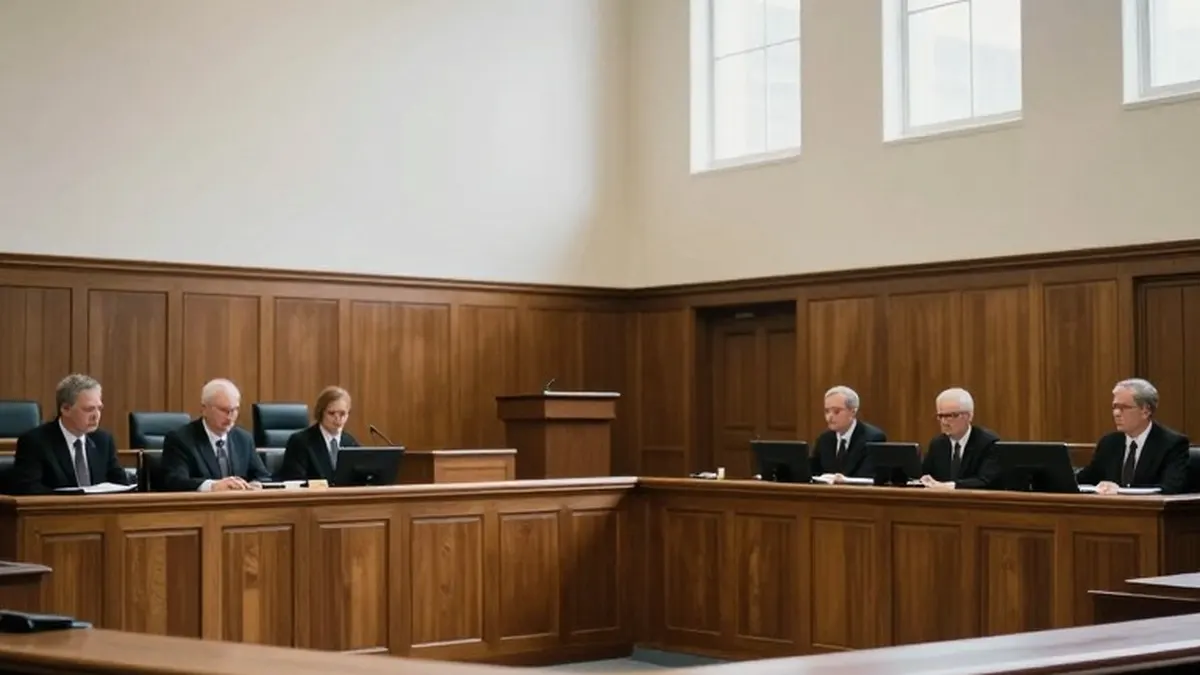
The High Court of Justice brought together all eleven Supreme Court justices on Sunday to address a significant legal question regarding the oversight of criminal investigations. The central issue is whether the justice minister possesses the authority to select an external supervisor when internal conflicts of interest prevent senior law enforcement officials from managing a case. The court aims to establish a framework that resolves these conflicts while minimizing political influence on investigative processes.
This legal dispute originated from a ruling issued last year that permitted Justice Minister Yariv Levin to appoint an outside supervisor for the investigation into former military advocate-general Yifat Tomer-Yerushalmi. That investigation focused on the leak of footage from the Sde Teiman detention facility and alleged obstruction of efforts to identify those responsible. The need for external supervision arose because senior civilian law enforcement officials had participated in reviewing the earlier examination of the leak and could potentially be called as witnesses.
Supreme Court President Isaac Amit clarified that the purpose of the Sunday hearing was to set precedential rules for future cases rather than to determine the specific supervisor for the Tomer-Yerushalmi investigation. The court focused on two primary questions: whether a conflict of interest affecting senior prosecutors automatically bars their colleagues from overseeing a case, and whether the justice minister can choose a replacement if supervision must move outside the prosecution service.
Attorneys challenging the earlier ruling argued that allowing a politician to make such a choice risks compromising the independence of the investigation. Conversely, several justices questioned whether officials could independently oversee an investigation involving their own superiors. The legal provision at the heart of the dispute is Section 23A(d) of the Civil Service Appointments Law, which allows a minister, after consulting the civil service commissioner, to assign another civil servant to handle matters that the normally responsible official is barred from handling.
In a judgment dated November 16, 2025, the court had previously ruled that Levin could use this power in the exceptional circumstances of the Tomer-Yerushalmi case. However, the court rejected his initial choice of judicial complaints commissioner Asher Kula, citing a law that prohibits Kula from taking on other work. The court later rejected the appointment of retired judge Joseph Ben-Hamo because he did not meet the requirement of being a senior civil servant. In December, President Amit agreed to reconsider the broader legal rules before an expanded panel, keeping the specific investigation outside that review.
During the Sunday hearing, attorney Yuval Yoaz, representing the Israel Democracy Guard, argued that the selection of a supervisor should remain within the legal system even when senior officials are conflicted. The justices questioned whether this approach would provide sufficient distance from those being investigated, asking if a subordinate could independently choose who would oversee an investigation involving the attorney-general. Yoaz suggested that an uninvolved deputy could make the selection and stated that he would rule out a ministerial appointment under any circumstances.
Justice Yael Willner noted that even the prosecution was not arguing for a complete ban on ministerial appointments. Attorney Ran Rosenberg, representing the prosecution, argued for a case-by-case examination of each official's involvement before concluding that no one within the prosecution or government legal advisory system could supervise. He maintained that a ministerial appointment should be a last resort rather than a response to a blanket finding that the entire institution was barred from handling the case.
Rosenberg suggested that the ministry's legal adviser could assess such conflicts, while President Amit emphasized that the minister could not personally decide who was barred from handling an investigation. Several justices questioned whether the proposed restrictions left enough room for the appointment power expressly granted by the Knesset. Justice Alex Stein stressed the need to interpret the law's provisions, while Deputy President Noam Sohlberg asked where the law supported a restriction so sweeping that the minister could effectively never use that power.
In the original proceedings, Levin argued that choosing a professional supervisor was distinct from directing the investigation. He maintained that outside supervision was necessary to protect public confidence when senior law enforcement officials were potential witnesses. The justices also discussed establishing an advance procedure for choosing a supervisor when conflicts arise, with Justice Dafna Barak-Erez suggesting the development of such a framework and President Amit raising the possibility of selection by lottery.