Furnaces 2,100 Degrees Hot Powered Bantu Expansion
Archaeological evidence from Great Zimbabwe reveals how natural-draft smelting allowed Bantu speakers to transform southern Africa's technology and languages over four millennia.
By Lorenzo Marshall ·
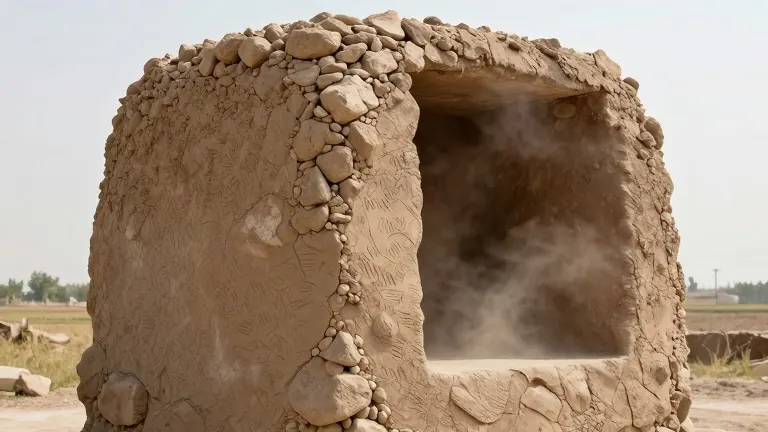
Iron smelting requires temperatures exceeding 2,100 degrees Fahrenheit, a heat that destroys most ancient furnace structures. Yet the remains of high-capacity kilns near Great Zimbabwe prove that local smiths mastered the process as early as 1000 AD, creating a technological base for a region-wide expansion.
Archaeometallurgist Ezekiel Mtetwa of the Field Museum of Natural History describes the surviving ruins as evidence of intensive production. The furnaces at sites like Mashava, located 25 miles northwest of the city, were nearly an adult's arm span wide. Their thick walls were engineered to hold extreme heat without the need for workers to pump air with bellows. Instead, the design used natural draft to pull air through a chimney, automating the airflow process.
This engineering allowed the Bantu-speaking peoples to mass-produce hoes, axes, and arrowheads. The migration of these groups from western Africa began between 6,000 and 4,000 years ago. As they moved into eastern and southern Africa, they replaced hunter-gatherer lifestyles with sedentary farming, livestock raising, and metalworking. The introduction of iron tools accelerated this shift, enabling larger communities to settle and cultivate land.
The impact of this migration extended beyond agriculture into the region's linguistic DNA. Today, approximately 350 million people speak one of the 500 distinct Bantu languages. These tongues range from Zulu in the south to Swahili in the east. Genetic studies indicate that a comparable number of Africans, along with many African Americans and Afro-Latinos, carry ancestral markers from this prehistoric expansion.