Digital Outreach: Florida Democrats Targeted Under-30 Voters With Social Video
Exit polls show Angie Nixon won 74% of young voters despite losing the Senate race, while PJ Perez captured 84% of votes in college precincts.
By Lorenzo Marshall ·
Florida Democrats spent millions this election cycle to reach voters under 30 through social media, a strategy that yielded large margins in key demographics. Nationwide, voters under 30 backed Democratic House candidates by more than 30 points. In Florida, that gap was even wider in specific age groups during the U.S. Senate race.
Angie Nixon, the Democratic candidate for U.S. Senate, lost the statewide race but performed strongly with younger Floridians. An exit poll showed she won 74 percent of voters ages 18 to 29 and 61 percent of those ages 30 to 44. Her campaign announced a six-figure digital ad buy in July and hired videographers to create content for online platforms.
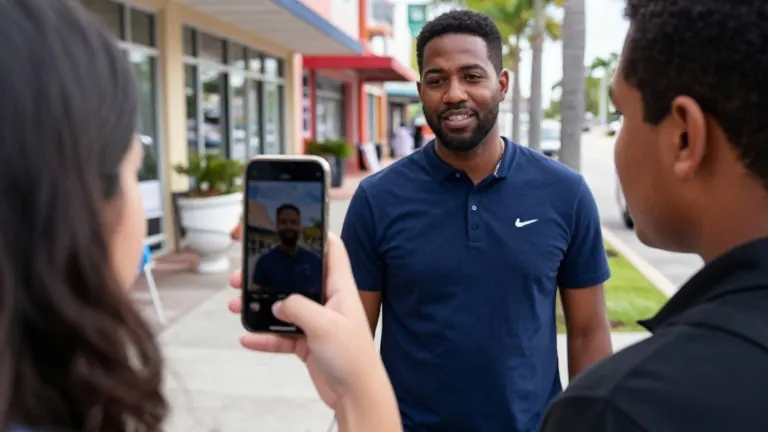
Candace Christian, a creative producer who traveled with Nixon, focused on capturing authentic moments rather than polished ads. She recorded interactions where voters stopped Nixon on the street to share their stories. Christian said she wanted viewers to feel a personal connection to the candidate, a style familiar to people who follow content creators on social media.
The same approach worked at the local level in Tallahassee. PJ Perez won the city commission seat with about 64 percent of the vote citywide. However, his performance was stronger in areas with high student populations. He won about 84 percent of the vote across five precincts assigned to the student unions at Florida State University and Florida A&M University.
Melanie Larson, who managed Perez’s campaign, said social video allowed the team to reach thousands of people at a lower cost than television ads. She noted that a single video could be seen over 100,000 times, a reach that would take much longer to achieve through door knocking alone. The campaign combined this digital strategy with direct voter outreach, including campus organizing.
Susan MacManus, a professor emerita at the University of South Florida, said the changing demographic makeup of the state requires campaigns to understand how different generations consume information. She warned that failing to recognize how younger voters get their news could cause a campaign to miss the mark quickly.
More than 75 percent of people under 30 now get their news from social media, often through algorithmic feeds rather than active searches. This shift in media consumption has made digital video a central tool for political campaigns targeting younger demographics.