Pakistan's Muhammad Zeeshan Ali set to become first foreigner on China's space station
The Shenzhou-24 mission will launch Wednesday, marking a historic moment in Sino-Pakistani relations as Ali joins the Tiangong crew.
By Harper Foster ·
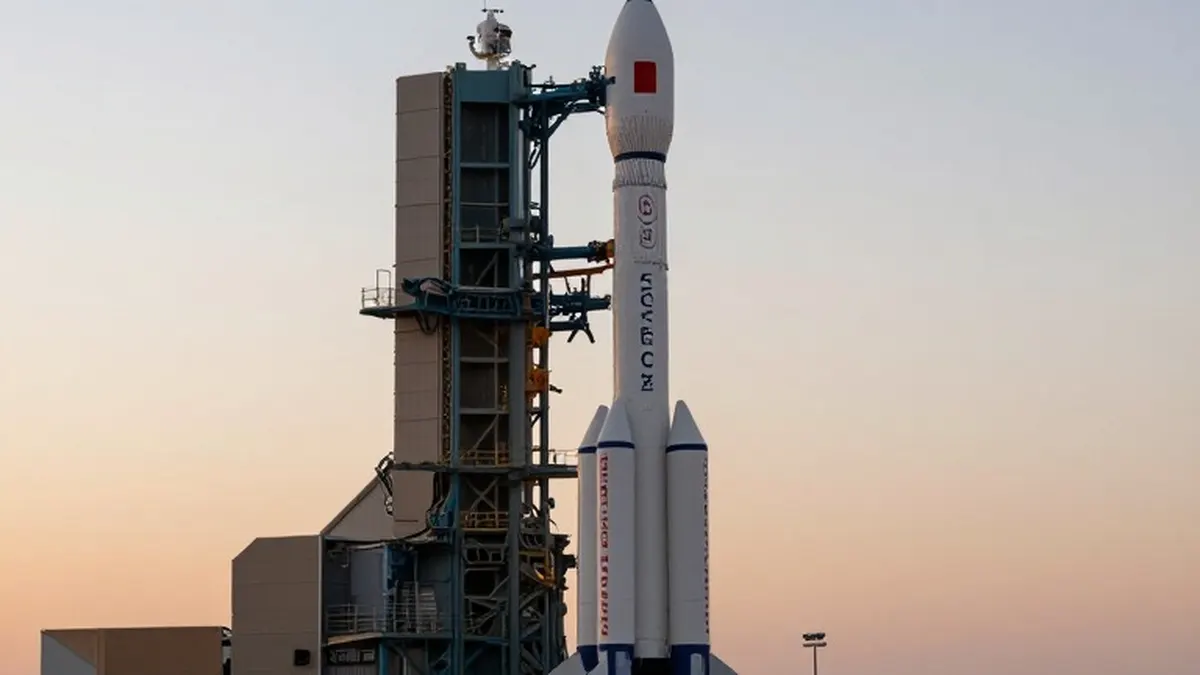
China is preparing to launch its first space mission that includes a foreign astronaut, a milestone that signals deepening ties between Beijing and Islamabad. The Shenzhou-24 spacecraft is scheduled to lift off from the Jiuquan launch center in China's northwestern Gobi Desert at 8:18 am local time on Wednesday, according to the China Manned Space Agency.
Pakistani payload specialist Muhammad Zeeshan Ali will make history as the first non-Chinese citizen to board the Tiangong space station. In remarks made on Tuesday, Ali stated that he carries the hopes of 250 million Pakistanis on his shoulders. He addressed young viewers directly, encouraging them to look up at the sky and remember that he is up there with their dreams.
The mission is expected to last approximately five days. Upon arrival at the station, Ali will join the current crew before returning to Earth with the Shenzhou-23 spaceship, which docked with the station earlier in May. This short orbital flight marks a significant step in the bilateral relationship, with Pakistani officials describing the selection as a source of national pride and a testament to the trust between the two nations.
Information Minister Attaullah Tarar called the mission a source of joy for the entire nation, while Planning Minister Ahsan Iqbal emphasized the iron brotherhood between Pakistan and China. Although Ali is the first Pakistani on a Chinese mission, he is not the first citizen of the country in space, as polar explorer Namira Salim flew on a Virgin Galactic mission in October 2023.
The current crew aboard the Tiangong space station includes commander Zhu Yangzhu, Lai Ka-ying, and Zhang Zhiyuan. Lai is noted as Hong Kong's first astronaut and the only woman currently on board. After the new crew arrives, Ali will return to Earth alongside Lai and Zhang, leaving Zhu to continue his solo stay.
Zhu Yangzhu is set to complete China's first full-year stay in space, a critical endurance test for the country's future ambitions in lunar exploration and deep-space travel. He will be joined for the next six-month rotation by veteran astronaut Tang Hongbo, who is 51 years old, and Wu Yi, who is in his late thirties and making his first voyage.
Tang Hongbo noted that working with a new international crew presented challenges, particularly regarding language and cultural differences. He explained that because most labels and operating instructions aboard the spacecraft are in Chinese, Ali began training with little knowledge of the language. To bridge this gap, Tang and Wu accelerated their English learning while Ali studied Mandarin.
Beijing has invested billions of dollars into its space program in recent years, aiming to close the gap with its primary rival, the United States. Pakistan, which maintains close diplomatic and trade relationships with China, is considered a natural partner in this expanding space endeavor.
China Manned Space Agency spokesman Zhang Jingbo confirmed that the Long March-2F rocket is being prepared with propellant. He assured the public that the crew is in good condition and that the space station is functioning normally, meeting all requirements for the upcoming launch.
The launch represents a significant moment in international space cooperation, highlighting China's growing role in global space exploration and the strengthening diplomatic bonds with its neighbors and trade partners.