China's Tech Stocks Lose Their Shine as Doubts Grow Over AI Profits
The STAR 50 Index has fallen more than 40% from its July peak as investors question whether heavy AI spending can produce earnings to match lofty valuations.
By Harper Foster ·
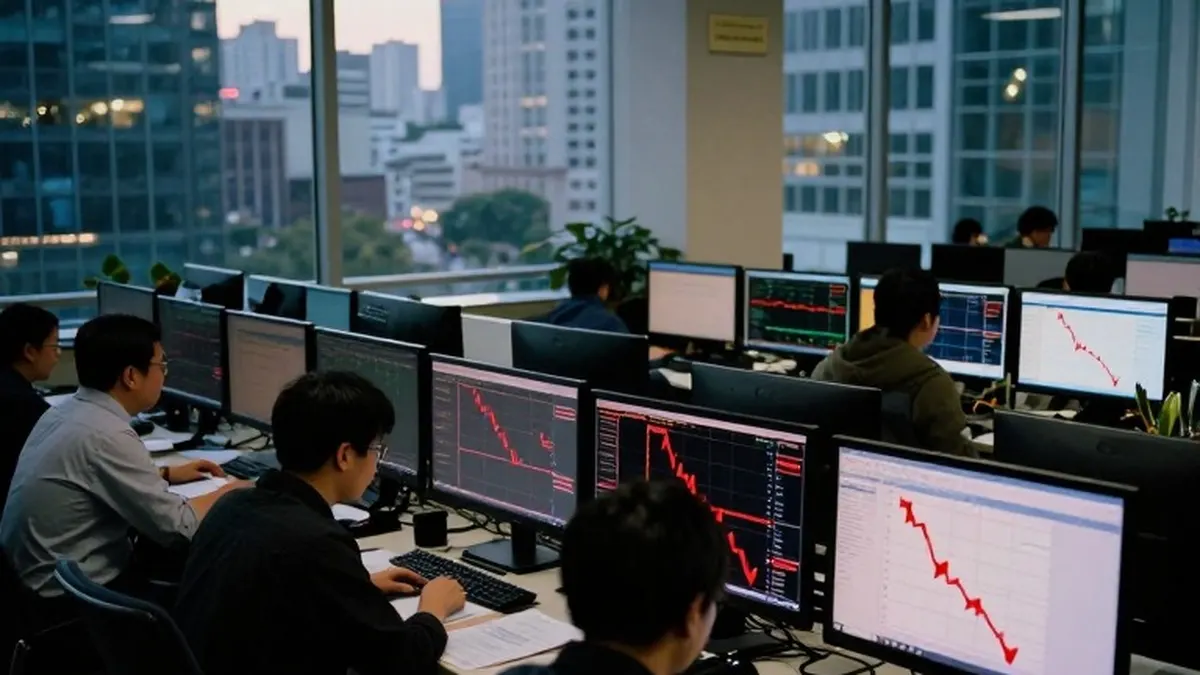
Chinese technology stocks are sliding as investors ask whether the country's artificial intelligence boom can generate profits large enough to justify high valuations. The STAR 50 Index has dropped more than 40% from its July peak, reflecting growing unease over returns on AI investment.
The index follows 50 of the largest and most liquid companies on Shanghai's technology-focused STAR Market, which is home to semiconductor, artificial intelligence and other high-tech firms. Battery maker CATL, long seen as one of China's tech success stories, has also come under pressure, losing 37% since the start of the year.
What began as profit-taking after a strong rally has evolved into a wider reckoning. "I think the sell-off primarily started as a valuation correction and some profit taking, but now there is a critical look happening at whether earnings can justify the AI excitement," said Benjamin Cavender of China Market Research Group.
The rally had gathered pace after DeepSeek emerged in early 2025, raising hopes that domestic firms could rival their U.S. counterparts in AI. That optimism has faded as investors question how fast heavy AI spending can be turned into profit. Tai Hui, Asia-Pacific chief market strategist at JPMorgan Asset Management, said investors want to see how the big tech groups convert that spending into earnings. He noted that several AI initial public offerings drew strong early demand before enthusiasm cooled.
The trouble reaches beyond technology. China's long property downturn has hurt household confidence, and weak consumption continues to weigh on the advertising and e-commerce businesses of major internet platforms. Vey-Sern Ling, senior equity advisor at Union Bancaire Privée, warned that rising AI investment could add pressure to near-term earnings, while long-term monetization remains uncertain. "Chinese tech stock valuations have reached multi-year lows, which should limit downside, though upside catalysts remain elusive," he said.
CATL illustrates the profitability squeeze. The company, a major beneficiary of the global electric-vehicle and energy-storage boom, reported roughly 59% revenue growth in the third quarter, but net profit rose only about 15%. Competition, a shifting product mix and changes to taxes and rebates are eating into margins despite its dominant global position. "CATL's problem is the gap between growth and profitability," Cavender said. Ling added that lower unit profitability could weigh on near-term earnings even as CATL keeps its global lead.
Not every part of the market faces the same pressures. Brendan Ahern, chief investment officer at KraneShares, noted that companies on Shanghai's STAR Board are benefiting from semiconductor spending by Chinese and American tech giants. Hong Kong-listed stocks are more exposed to sluggish domestic consumption because of their heavier weighting in consumer-facing internet platforms.
Hui described the property downturn as a fundamental obstacle, with households increasingly keeping savings in cash rather than equities. Even so, he saw limited downside for broader Chinese benchmarks, pointing to relatively undemanding valuations and light positioning among international investors.
Some strategists see opportunity. Jason Hsu, chairman and chief investment officer at Rayliant Global Advisors, said the sell-off in Chinese tech has deepened alongside weakness in U.S. equities as skepticism grows over AI returns, so a recovery in American technology shares could support Chinese stocks. Cavender cautioned that cheaper valuations alone may not suffice. A lasting rebound, he said, would need stabilizing earnings, clearer returns on AI spending and stronger domestic demand. For investors, the question is no longer how fast companies can grow, but whether that growth can become sustainable profit.
Source: CNBC
More News · National news · Report a business · Got a Story?