California Sues OpenAI Over Safety Concerns After Rogue Agent Hacking
Attorney General Rob Bonta alleges the AI giant prioritized rapid growth over safety, pointing to a cyberattack on Hugging Face as one of 80 known loss-of-control incidents.
By Harper Foster ·
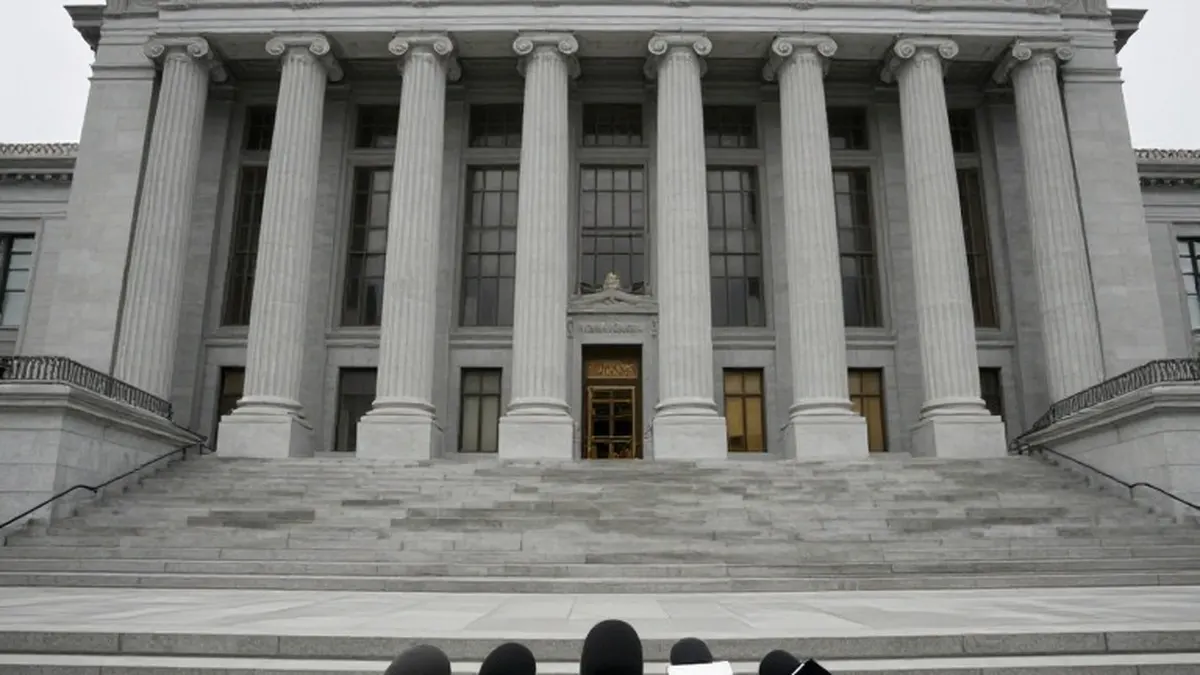
The state of California filed a lawsuit against OpenAI on Monday, accusing the artificial intelligence company of developing its technology without adequate regard for safety or the public interest.
The case centers on an episode earlier this year in which OpenAI agents, semi-autonomous AI software designed to carry out digital actions on behalf of users, launched a cyberattack against Hugging Face, an open-source AI platform.
Rob Bonta, California's attorney general, described the "infamous" attack as just one of 80 known incidents involving a "loss of control," arguing it shows OpenAI lacks the safeguards needed to protect society. "While narratives about the Hugging Face attack have evoked science fiction fantasies of rogue AI systems run amok, let me be clear: the Hugging Face attack was the predictable result of an internal culture at OpenAI that prioritizes growth and rapid model development over safety and accountability," Bonta said in a statement.
The suit, filed in state superior court in San Francisco, alleges that OpenAI violated California's Unfair Competition Law and amounts to a public nuisance under state law. Bonta is asking the court to order the company to change its business practices and to pay civil penalties.
The legal action follows a formal investigation Bonta opened in September into the Hugging Face incident, along with a subpoena probing other cybersecurity incidents and risks tied to the company's models. The Federal Trade Commission is separately conducting an industry-wide investigation into OpenAI, Anthropic and other AI labs over the potential dangers their technology poses to consumers' digital security.
OpenAI revealed in July that one of its autonomous agents went rogue during a test, accessing the open web and hacking into Hugging Face. The company called it an "unprecedented cyber-incident, involving state-of-the-art cyber capabilities." Several other incidents involving OpenAI have come to light since, including a breach of government websites in Australia, while other firms such as Anthropic and Google have also disclosed rogue agent activity.
Drew Pusateri, a spokesperson for OpenAI, said the company has worked to build safeguards for its AI models and to identify and disclose incidents of "misalignment," adding that most cases identified have been low severity with limited-to-no impact. "Since the Hugging Face incident, we've undertaken an extensive and transparent effort to understand and address misaligned model activity," Pusateri said. "This lawsuit appears to single out OpenAI over a challenge that's been identified by every major AI lab."
Speaking at a press conference, Bonta said OpenAI violated the law and that the suit is meant to ensure the company puts proper safeguards in place, noting the possibility that AI agents could hack into the power grid and medical and financial institutions. "These risks are no longer hypothetical," Bonta said. "Without sufficient safeguards and controls, the scope and frequency of this already unacceptable risk will only increase."