Aurora judge cites lack of funds as reason for not appointing lawyers
Civil liberties groups say the municipal court is ignoring a state law that guarantees counsel to defendants facing potential jail time.
By Lorenzo Marshall ·
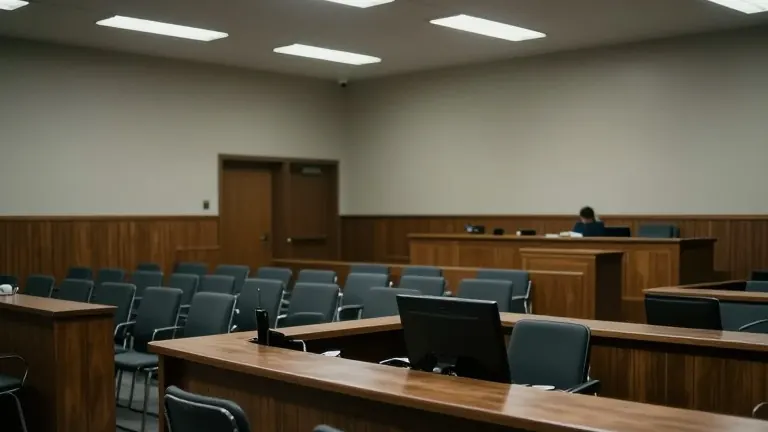
Aurora’s municipal court has stopped appointing lawyers for low-income defendants with pending cases, two civil liberties organizations reported this week.
The American Civil Liberties Union of Colorado and the Colorado Freedom Fund sent a letter to city leaders on Oct. 1. They stated that the court is not following state law. This has left many indigent defendants to handle complex legal matters alone.
Gov. Jared Polis signed House Bill 1134 into law in April. The Fairness & Transparency in Municipal Court Act clarified that defendants in municipal court have a right to counsel if their offense carries the possibility of jail time. This right already exists in state court under the Colorado and U.S. constitutions.
Civil rights groups proposed the bill after observing that municipal courts across the state were not providing lawyers to indigent defendants.
Presiding Judge Shawn Day addressed the issue during a hearing on Oct. 8. He said he was not following the new law because he viewed it as an unfunded mandate. This term describes a state requirement for local governments to provide a service without providing adequate funding.
Day said in a hearing transcript, 'If you don’t fund it, it becomes optional.' He added that he and other cities would be happy to follow the law if the state provided the money.
In the specific case before the court that day, the city waived the possibility of jail, according to Day. He stated that the city decides whether a defendant can apply for a public defender. 'The city says no, because we don’t have the money for it,' Day said.
Joe Rubino, a city spokesperson, said in a statement on Tuesday that Day ruled the service requirements in the bill go beyond what is constitutionally required. Rubino declined to comment further, noting the case could be subject to appeal.
The civil liberties groups argue that state law is clear. Counsel must be provided to all people facing a potential jail sentence under the city code, regardless of whether prosecutors seek jail time. They say this prevents people from accepting uncounseled plea deals that might impact their immigration status.
Aurora City Councilwoman Alison Coombs, who also serves as the city’s mayor pro tem, told The Denver Post that the municipal court’s practices are deeply concerning. She said council was not advised of a standing judicial order. She added that the issue should be subject to council policy direction rather than a unilateral determination by the chief judge.
Coombs said she informed Day that it is not appropriate for the court to take policy positions. She noted that the council has never taken the position that the new law constitutes an unfunded mandate.
The council is updating the city code to reflect state law and comply with a recent Colorado Supreme Court ruling concerning municipal sentences. Coombs said members hope to have the changes before the full council by February. She stated that the city should view access to counsel as an issue affecting human beings and their outcomes rather than a problem to fix.