Culinary historian Michael Twitty explores African roots of Thanksgiving food
Michael Twitty discusses the historical significance of Kush, a dish that connects African American culinary traditions to West African heritage.
By Aiko Petrov ·
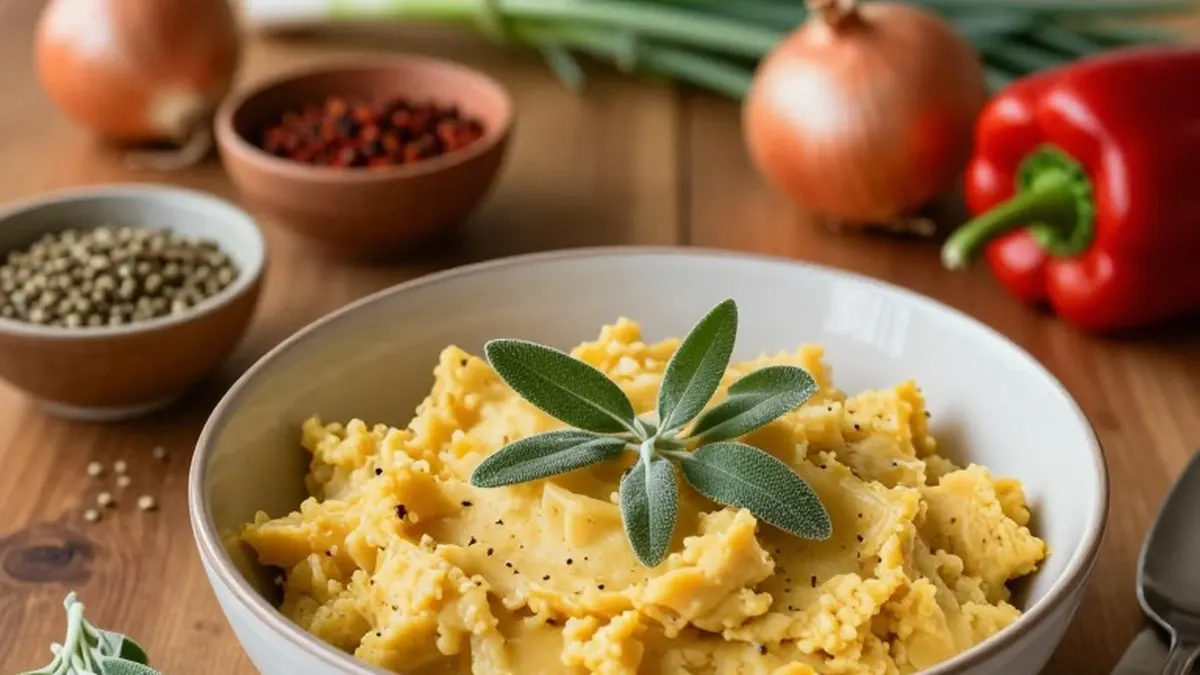
On the morning of the Thanksgiving holiday, Morning Edition host Leila Fadel moved her broadcast out of the studio and into her home kitchen. There, she was joined by Michael Twitty, a two-time James Beard Award winner and culinary historian. Twitty arrived carrying ingredients from his own garden, including fresh sage, onions, fish peppers, and a specific spice blend he had prepared for the occasion.
Twitty has established himself as one of the nation's leading experts in tracing African American culinary history through his written work. His book, The Cooking Gene, played a significant role in positioning him as a chronologist who examines how food reflects ancestry and cultural survival.
One of the dishes Twitty highlighted during the segment is Kush, which he describes as a forerunner to the Southern cornbread dressing commonly served on Thanksgiving. He has been preparing this dish since his teenage years. The name and the ingredients of the dish serve as a testament to how food was used by enslaved people in the Americas to preserve their cultural identities.
According to Twitty, the name Kush derives from Hausa, a language spoken in West Africa. He explained that the Hausa people are predominantly Muslim, but their practice of Islam is deeply influenced by traditional local culture and spirituality. He noted that the term Kush sounds similar to the word couscous, drawing a linguistic connection between the regions.
The preparation and consumption of Kush allow Twitty to maintain a tangible link to his ancestral heritage. He shared that while he could not previously identify specific African ethnic groups from which he descended, he now knows he is part Wolof, Hausa, Fula, and Serer, among others. This knowledge allows him to see the dish as a direct connection to his roots and personal history.
During the conversation, Twitty also discussed his work documenting the hybrid culinary traditions of African American Jewish people. He cited examples such as matzah ball gumbo and black-eyed peas and quiche. He explained that these dishes often originate from North Africa or Ethiopia, and mentioned adapting recipes like jollof rice to be kosher by removing shellfish, which is a common ingredient in the traditional version of the dish.
For Twitty, the significance of Thanksgiving lies less in the traditional lore of the holiday and more in the communal aspect of bringing people together. He observed that for a plurality of African Americans, the standard mythos of the holiday holds little meaning. However, the group strongly values the traditions of cooking, eating, and gathering that the day facilitates.
In this context, Kush represents a way for Twitty to taste history and maintain his connection to his past. He stated that making the dish serves as a reminder that he has not forgotten who he is and where he comes from. It also serves as a reminder of the legacy he intends to leave behind.
Those interested in trying the dish can find the recipe for Twitty's Kush in his book, Recipes from the American South. The publication offers further insight into the deep historical roots of the foods he celebrates.
More News · National news · Report a business · Got a Story?