A 780 AD Hearth and 209 Artifacts Fail to Stop Jackass Hill Renovation
A state report deems the Littleton viewpoint an open camp rather than a protected site, clearing the way for construction despite concerns from local advocates.
By Aiko Petrov ·
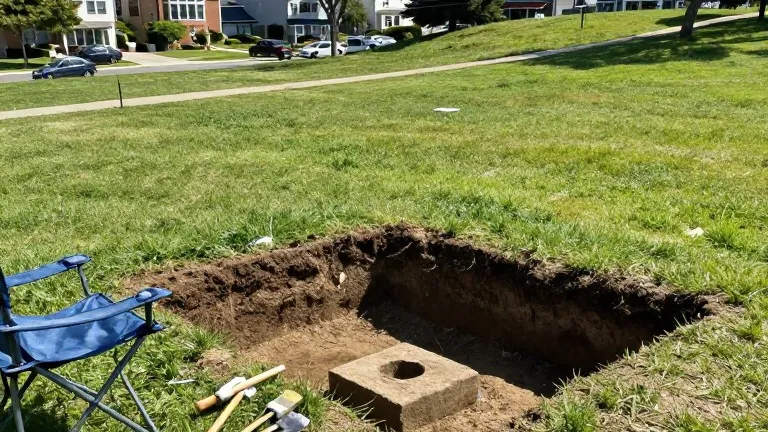
The renovation of Jackass Hill Park in Littleton is no longer blocked by an archaeological designation, according to a preliminary state report released in October. The document concludes that the park's famous viewpoint is not historically significant, a finding that removes the last major hurdle for South Suburban Parks and Recreation to begin construction.
The determination follows a three-day excavation conducted in August. The dig was initiated after local residents, including Ned Sterne and advocate archaeologist Craig Banister, submitted hundreds of finds to state officials. The report notes that 209 indigenous artifacts were examined, with 70% identified as cultural items and the remaining 30% classified as unmodified rocks.
Dr. Holly Norton, the Colorado State Archaeologist and Deputy State Historic Preservation Officer, described the excavation as limited in scope. Her team recovered more than 350 artifacts from the area, classifying the location as an indigenous open camp. Approximately 90% of the recovered items were undiagnostic bone fragments and small pieces of chipped stone, known as lithic microflakes. The crew also uncovered a hearth in the same area.
The hearth provided the most concrete evidence of age. Banister and Sterne sent a sample of charcoal from the fire pit to ICA Labs Inc for radiocarbon testing. The analysis indicated an 82.2% probability that the material dates to between 670 and 780 AD. Norton stated that the site likely dates back thousands of years, but noted that decades of casual collecting by park visitors have made it difficult to assess what remains.
"For us: there's no longer a site," Norton said. She explained that the state requires clear boundaries to commit preservation resources, and the current evidence does not meet that threshold. The report emphasized that the area functions as an open camp where people gathered, rather than a formal settlement.
Sterne expressed that he was not surprised by the outcome, citing the shallow depth of the hand excavation. He argued that the top of the hill is hallowed ground to many Littleton residents and has been used for 8,000 years. He urged South Suburban to revise its plans to leave the hilltop untouched. Alternatively, he proposed a formal scientific excavation before work begins, warning against what he called archaeology by backhoe.
South Suburban has responded by hiring an archaeologist to monitor the future construction. The state recommended this step in case deeper digging uncovers new materials. Construction is expected to excavate six feet into the ground, a depth greater than the initial three-day dig. If significant material is found, the on-site archaeologists will help assess its significance for both the city and the state.
Banister noted that it is rare for sites to survive within a metro area due to extensive development. He believes more material likely lies underground. The park is scheduled to undergo renovation soon, with the hired archaeologist present during the initial phases of the project.
More News · Littleton news · Report a business · Got a Story?